
Advice for First-Time Home Buyers: 12 Essential Tips for Buying Your First Home in the USA
October 9, 2026

Buying your first home is an exciting milestone, but it can also feel overwhelming. From understanding mortgage options and saving for a down payment to comparing neighborhoods and reviewing closing documents, first-time buyers have many decisions to make before receiving the keys to their new home.
The good news is that you do not need to know everything at once. With a realistic budget, a clear homebuying plan, and the right professional guidance, you can make more informed decisions and avoid common mistakes.
This guide shares 12 essential tips for first-time home buyers in the USA, including how to prepare financially, compare mortgage lenders, understand closing costs, inspect a property, and explore homebuyer assistance programs.
Whether you are planning to buy a starter home, a townhouse, a condominium, or a single-family house, these practical tips can help you prepare for the process.
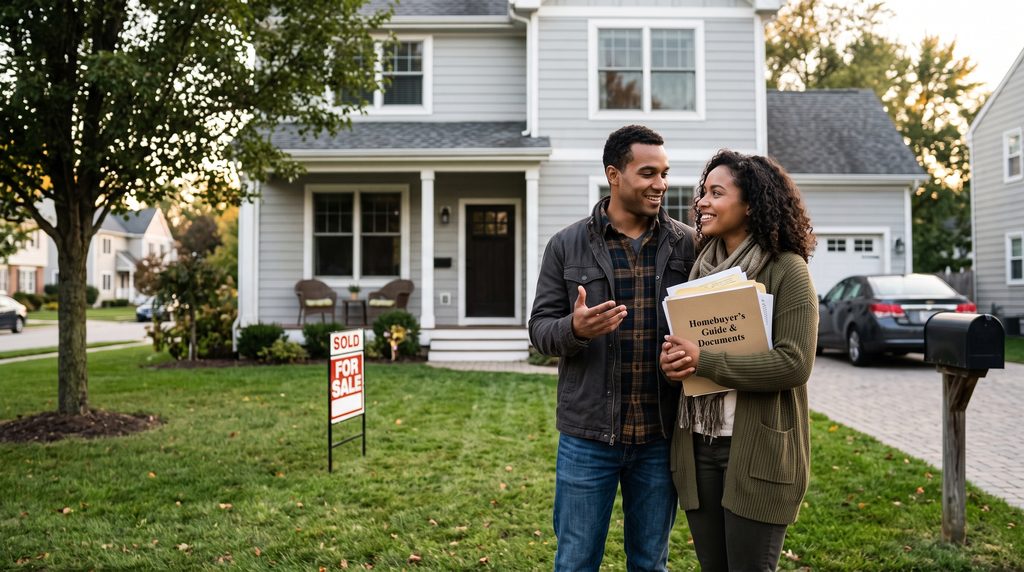
1. Understand How Much Home You Can Afford
One of the first steps in buying a home is determining how much you can comfortably afford.
A mortgage lender may approve you for a particular loan amount, but that does not necessarily mean borrowing the maximum amount is the right decision for your household.
Start by reviewing your monthly income, existing debts, savings, regular expenses, and future financial commitments.
Your homeownership budget should account for more than the mortgage principal and interest. Depending on the property, your monthly housing expenses may also include:
- Property taxes
- Homeowners insurance
- Mortgage insurance
- Homeowners association (HOA) dues
- Flood or other supplemental insurance
- Utilities
- Routine maintenance and repairs
For example, a house with a lower asking price may still be expensive to own if it has high property taxes, substantial HOA fees, or costly insurance requirements.
Practical tip: Decide on a comfortable monthly housing budget before setting your maximum home price. Leave room for emergencies, retirement savings, transportation, and other household expenses.
The Consumer Financial Protection Bureau (CFPB) provides guidance on estimating total homeownership costs and determining how much you can afford. Explore the CFPB homebuying resources.
2. Check Your Credit Before Applying for a Mortgage
Your credit history can affect mortgage eligibility, interest rates, and the loan programs available to you.
Before applying, review your credit reports for inaccurate information, unfamiliar accounts, or other errors. If you find an error, follow the appropriate dispute process.
You can also prepare your credit profile by:
- Paying bills on time
- Reducing high credit card balances
- Avoiding unnecessary new credit applications
- Reviewing outstanding debts
- Keeping your financial records accurate
Do not assume that you need a perfect credit score to purchase a home. Different mortgage programs have different eligibility requirements, and lenders may consider several aspects of your financial situation.
For example, conventional mortgages, FHA-insured loans, VA-backed loans, and USDA-supported loans can have different requirements.
Before making major financial changes, discuss your situation with potential mortgage lenders. Closing old credit accounts or taking on new debt may not help your application in every circumstance.
3. Save for Your Down Payment and Closing Costs

Many first-time buyers focus on saving for a down payment but forget that purchasing a home involves additional upfront expenses.
Your initial cash requirement may include:
- Down payment
- Mortgage lender fees
- Appraisal fees
- Home inspection costs
- Title-related charges
- Recording and government fees
- Prepaid insurance
- Initial property tax or insurance escrow deposits
- Moving expenses
Closing costs commonly vary by loan, location, and transaction. The CFPB explains that they may typically range from 2% to 5% of the purchase price, excluding the down payment, although your actual costs can differ. Learn about budgeting for a home purchase.
Example: Saving for a $300,000 Home
The following figures are illustrations, not a quote or a prediction of what you will pay.
| Expense | Example amount |
|---|---|
| Home price | $300,000 |
| 5% down payment | $15,000 |
| Estimated closing costs at 3% | $9,000 |
| Total initial amount | $24,000 |
This example does not include moving expenses, repairs, furnishings, or emergency savings.
The main lesson is to budget for the entire transaction rather than saving only for the down payment.
4. Explore First-Time Home Buyer Mortgage Programs
First-time buyers in the United States may qualify for mortgage programs designed to make homeownership more accessible.
Your eligibility depends on factors such as the property, income, credit history, intended use, location, and applicable program rules.
Common options to investigate include:
Conventional mortgages: Some conventional loan programs allow eligible buyers to purchase with a relatively small down payment.
FHA-insured loans: These mortgages are insured by the Federal Housing Administration and can offer qualifying borrowers flexible down payment and credit requirements.
VA-backed loans: Eligible veterans, service members, and certain surviving spouses may qualify for VA home loan benefits, potentially including no down payment when program requirements are met.
USDA-supported loans: Eligible buyers purchasing qualifying homes in eligible rural areas may be able to use USDA-backed financing, subject to program requirements.
State and local assistance: State housing finance agencies, cities, counties, and nonprofit organizations may offer down payment assistance, closing cost assistance, or homebuyer education.
Do not assume that every program is available to every first-time buyer. Some have income limits, purchase price limits, occupancy rules, or other conditions.
To compare options, start with the CFPB mortgage shopping guide. You can also explore homebuyer resources from the U.S. Department of Housing and Urban Development (HUD).
5. Get Mortgage Pre-Approved Before House Hunting Seriously
Mortgage pre-approval can help you understand your likely borrowing range before you make an offer.
A lender typically reviews information about your income, debts, credit, assets, and other financial details to estimate how much you may be able to borrow.
Pre-approval is not a guarantee of final loan approval. The lender may still need to verify your information, review the property, and complete underwriting.
Consider contacting multiple lenders rather than accepting the first offer.
Compare at least three mortgage offers when practical, paying attention to:
- Interest rate
- Annual percentage rate (APR)
- Loan term
- Monthly payment
- Mortgage insurance
- Origination charges
- Discount points
- Estimated cash needed at closing
- Whether the interest rate can change
A loan with a slightly lower advertised interest rate is not automatically the least expensive option once fees and other terms are considered.
Practical tip: Ask each lender to explain the total cost of the loan, not just the monthly principal and interest payment.
6. Research Neighborhoods Carefully
Choosing the right home involves more than evaluating the building. The surrounding neighborhood can influence your daily life, transportation costs, future resale options, and overall housing expenses.
Before making an offer, research the following factors:
- Distance to work or school
- Access to public transportation
- Nearby grocery stores and healthcare
- Road access and commute times
- Local property tax rates
- HOA rules and fees
- Flood risk and other environmental concerns
- Local development plans
- Comparable home prices
- Community services and amenities
Visit the area at different times of day when possible. A neighborhood may feel very different during weekday rush hour, on weekends, or after dark.
For safety information, use reliable local sources and review available data carefully rather than relying only on online comments.
Also check whether the property is in a flood zone or another area with special insurance considerations. An affordable purchase price may be less attractive if the property requires costly coverage or significant future work.
7. Make a List of Must-Haves and Nice-to-Haves
It is easy to become distracted by attractive kitchens, spacious living rooms, or impressive outdoor spaces when viewing homes.
Before touring properties, write down the features that matter most to your household.
Must-Haves
These are features you genuinely need, such as:
- A suitable number of bedrooms
- A manageable commute
- Accessibility requirements
- A realistic total monthly payment
- Enough space for your household
- A location that meets your needs
Nice-to-Haves
These may include:
- A large backyard
- A finished basement
- Updated kitchen cabinets
- A walk-in closet
- A swimming pool
- A recently renovated bathroom
This distinction can help you focus on homes that meet your actual needs rather than stretching your budget for cosmetic features.
Remember that some improvements can be completed later, while changing a home’s location, lot size, or basic layout may be much more difficult or expensive.
8. Work With the Right Real Estate Professionals
Buying a home involves several people, and each may play a different role in the transaction.
Depending on your needs, you may work with:
- A real estate agent
- A mortgage loan officer
- A home inspector
- A real estate attorney, where appropriate
- A title or settlement professional
- An insurance agent
- A housing counselor
Ask about each professional’s role, experience, fees, and potential conflicts of interest.
If you work with a real estate agent, clarify the terms of your representation agreement, including compensation, before signing. Real estate practices and requirements vary by state and transaction.
A professional can help explain the process, but you should still ask questions and review important documents yourself.
9. Never Skip a Home Inspection Without Understanding the Risks
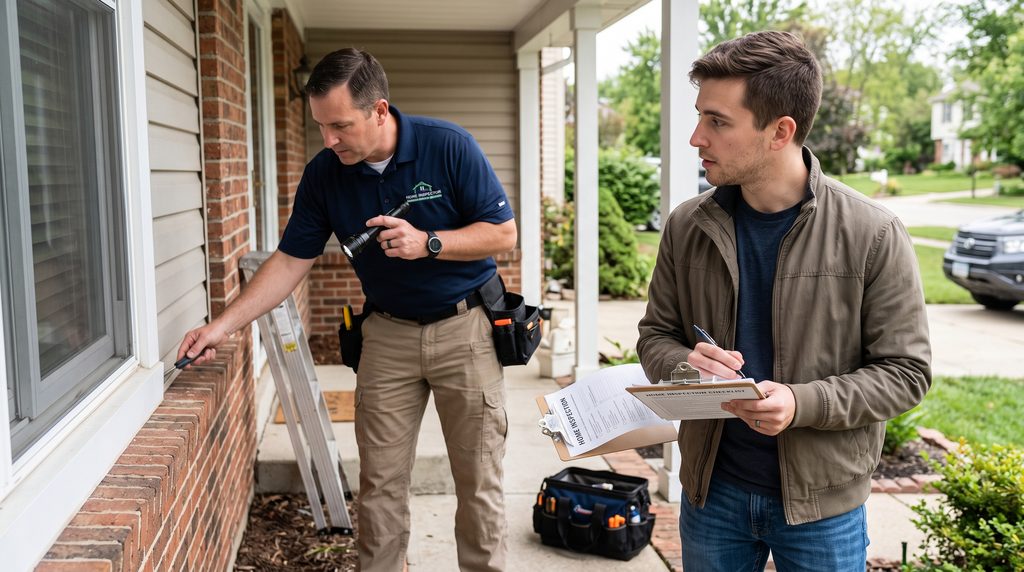
A property can look beautiful during a showing while still having problems that are expensive to fix.
A professional home inspection can help identify potential issues involving:
- Roof condition
- Foundation and structural components
- Plumbing
- Electrical systems
- Heating and cooling equipment
- Windows and doors
- Water intrusion
- Drainage
- Attic and ventilation
- Visible signs of pests
An inspection is not a guarantee that every defect will be discovered, but it can provide valuable information about the home’s condition.
Depending on the findings, you may decide to negotiate repairs, request a credit, seek specialist evaluations, or reconsider the purchase.
Where appropriate and negotiable, consider an inspection contingency in your purchase contract. Understand the deadlines and conditions carefully because contingency rights vary according to the contract and local law.
Important: Do not assume that a seller’s disclosure replaces an independent inspection.
10. Understand the Full Monthly Housing Payment
Before making an offer, estimate your total monthly housing cost.
A mortgage payment can include principal and interest, but the overall cost of ownership may also include property taxes, insurance, mortgage insurance, and HOA dues.
For example, consider a hypothetical monthly budget:
| Housing expense | Illustrative monthly cost |
|---|---|
| Mortgage principal and interest | $1,650 |
| Property taxes | $350 |
| Homeowners insurance | $150 |
| Mortgage insurance | $100 |
| HOA dues | $75 |
| Total monthly housing cost | $2,325 |
These figures are examples only. Actual payments vary widely by purchase price, down payment, interest rate, location, insurance needs, and loan terms.
This total also excludes utilities, routine maintenance, repairs, and other household costs.
Property taxes and homeowners insurance can increase over time, so avoid basing your entire decision on an initial estimate.
11. Review the Purchase Contract and Closing Documents
Once a seller accepts your offer, there are still important steps to complete before you own the home.
Review the contract carefully, including:
- Purchase price
- Earnest money requirements
- Financing deadlines
- Inspection provisions
- Contingencies
- Closing date
- Seller concessions
- Required disclosures
- Any agreed-upon repairs
As closing approaches, review your final mortgage terms and costs.
For most covered mortgage transactions, the lender must provide a Closing Disclosure at least three business days before closing. Compare it with your Loan Estimate and ask the lender or settlement professional to explain anything you do not understand. Read the CFPB’s closing guidance.
Be alert for mortgage closing scams. If you receive an email claiming that wiring instructions have changed, verify the information using a trusted phone number you already know. Do not rely solely on contact details in the suspicious message.
Never feel pressured to sign documents you do not understand.
12. Keep Money Aside After You Buy the Home
Buying the property is only the beginning of homeownership.
Once you move in, you may need money for repairs, appliances, landscaping, furniture, maintenance, or unexpected expenses.
For that reason, avoid using every available dollar for the down payment and closing costs.
Consider keeping an emergency fund that reflects your income stability, household expenses, insurance coverage, and property condition.
A home maintenance budget can also help you plan for expenses such as:
- Roof repairs
- HVAC servicing
- Plumbing repairs
- Appliance replacement
- Exterior painting
- Landscaping
- Pest prevention
- Seasonal maintenance
The amount you need depends on the property. A recently renovated condominium may have different maintenance needs from an older single-family home.
Before purchasing, ask what major systems may need attention in the coming years.
First-Time Home Buyer Checklist
Use this checklist to organize your homebuying preparation.
- Review your credit reports.
- Calculate your comfortable monthly housing budget.
- Save for the down payment and closing costs.
- Keep emergency savings separate where possible.
- Explore mortgage and assistance programs.
- Compare mortgage offers from multiple lenders.
- Obtain a mortgage pre-approval.
- Research neighborhoods and property taxes.
- Make a list of must-have features.
- Review the property condition and disclosures.
- Arrange an independent home inspection.
- Understand contract deadlines and contingencies.
- Compare your Loan Estimate with your Closing Disclosure.
- Verify closing instructions before transferring funds.
- Plan for maintenance and repairs after moving in.
Common First-Time Home Buyer Mistakes to Avoid
Buying More Home Than You Can Afford
A lender’s approval amount is not necessarily the right spending target for your household. Base your decision on the complete monthly cost and your other financial responsibilities.
Forgetting Closing Costs
The down payment is only one part of the cash needed to complete a home purchase.
Choosing a Mortgage Without Comparing Offers
Different lenders can offer different rates, fees, and terms. Compare the full cost of each option.
Ignoring the Property’s Condition
A home that needs substantial repairs may cost far more than its purchase price suggests.
Making Major Financial Changes Before Closing
New debt, missed payments, or unexplained changes in your financial circumstances may affect final mortgage approval. Ask your lender before making major changes.
Using All Your Savings
Homeownership comes with ongoing expenses. Keeping a financial cushion can help you handle unexpected repairs or changes in income.
Final Thoughts
The best advice for first-time home buyers is to prepare before you start making offers.
Understand your finances, set a realistic budget, compare mortgage options, research neighborhoods, and evaluate each property’s condition carefully. Take time to review your contract and closing documents, and remember that homeownership includes expenses beyond the monthly mortgage payment.
You do not need to buy the biggest or most expensive home you qualify for. You need a property that fits your needs, your financial circumstances, and your long-term plans.
With careful preparation and support from qualified professionals, you can approach your first home purchase with greater confidence and make a decision that works for your household.
Frequently Asked Questions
1. What is the best advice for first-time home buyers in the USA?
Start by calculating your total monthly housing budget, reviewing your credit, saving for upfront costs, and comparing mortgage offers. Research neighborhoods, inspect the property, and review the purchase contract before committing.
2. How much money do first-time home buyers need upfront?
The amount depends on the home’s price, loan program, down payment, closing costs, prepaid expenses, and other transaction details. Buyers should also consider moving costs and keep savings available for emergencies and repairs.
3. Do first-time home buyers need a 20% down payment?
No. Some mortgage programs allow eligible buyers to purchase with smaller down payments. However, a smaller down payment may increase borrowing costs or require mortgage insurance, depending on the loan.
4. What credit score do I need to buy my first home?
There is no single credit score requirement for every mortgage. Requirements vary by lender and loan program, and lenders may also consider income, debts, assets, and other factors.
5. Can first-time home buyers get down payment assistance?
Potentially. State housing finance agencies, local governments, and eligible organizations may offer assistance programs. Availability and eligibility depend on location, income, property price, and program requirements.
6. Is mortgage pre-approval the same as final approval?
No. Pre-approval is an initial assessment of your likely borrowing ability. Final approval generally requires further verification, underwriting, and review of the property and loan requirements.
7. Should I get a home inspection before buying?
An independent inspection can help identify potential defects and maintenance concerns. Review the inspection results carefully and understand any inspection-related rights and deadlines in your purchase contract.
8. What costs should I budget for after buying a house?
Plan for utilities, property taxes, homeowners insurance, maintenance, repairs, appliances, landscaping, and HOA fees where applicable. The specific costs depend on the home and location.
9. Are there special mortgage programs for veterans?
Eligible veterans, service members, and certain surviving spouses may qualify for VA-backed home loan benefits. Check current VA eligibility and loan requirements before relying on a particular benefit.
10. Is buying a home better than renting?
It depends on your finances, local housing costs, how long you plan to stay, maintenance responsibilities, and personal priorities. Compare the total cost of buying with renting rather than assuming either option is always better.