
What Are the Top Real Estate Markets Globally? 2026
October 18, 2026

Investment Guide
Investing in international real estate can open doors to rental income, long-term wealth building, and portfolio diversification. However, choosing the right country or city requires more than looking at property prices or attractive rental returns. Investors also need to consider economic growth, housing demand, foreign ownership laws, taxes, financing costs, and the ability to sell a property when needed.
So, what are the top real estate markets globally in 2026? There is no single market that is best for every investor. Dubai may appeal to buyers seeking rental income and an established international property sector, while Tokyo attracts attention for its prime residential market performance. Cities such as Madrid and Lisbon may appeal to investors interested in European housing demand, while New York and London remain important global property hubs.
According to Savills’ World Cities Prime Residential Index, H1 2026, prime residential capital values across its 30-city index increased by 0.6% during the first half of 2026, while rents increased by 1.1%. Tokyo led capital-value growth, while Cape Town and Lisbon were among the stronger rental markets. These results show why investors should compare individual cities rather than assume every property market in a country performs equally well.
This guide explores seven important international property markets, the benefits of buying abroad, the characteristics of a promising investment destination, and the questions to ask before investing.
1. What Are the Top Real Estate Markets Globally?
The best global real estate market depends on your budget, investment strategy, risk tolerance, and preferred investment period. The following destinations are worth researching because of their international property-market presence, rental demand, or potential opportunities.
These are markets to investigate, not a definitive performance ranking or a guarantee of future returns.
1. Dubai, United Arab Emirates
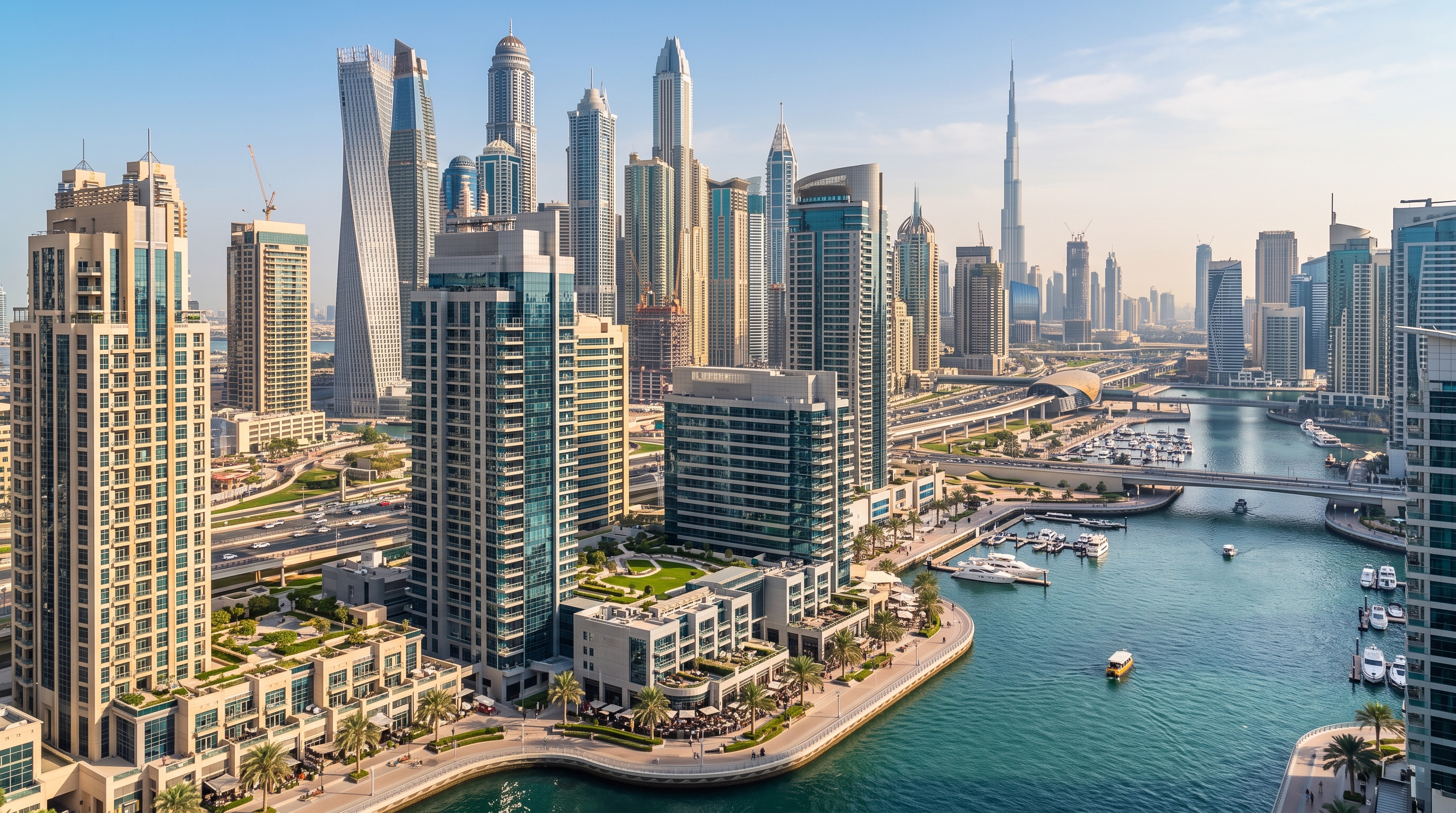
Dubai is an internationally recognized property destination with residential apartments, luxury villas, holiday homes, and commercial developments. Its international business environment, tourism industry, and population of expatriate residents help support demand in parts of the rental market.
Investors often examine Dubai when looking for rental-income opportunities or modern properties in established communities. However, results vary significantly by neighborhood, property type, purchase price, service charges, and occupancy.
Before purchasing, investigate whether the property is in an area where foreign buyers are permitted to own property, verify the title and developer, and calculate the total costs of ownership.
Best suited for: Investors researching international rental properties, apartments, and selected luxury developments.
Main risks: Market cycles, oversupply in some locations, service charges, vacancy, and fluctuations in property values.
2. Tokyo, Japan

Tokyo is a major economic center with extensive transport infrastructure, established employment markets, and a large residential property sector. Its housing market includes compact apartments, family homes, and premium properties in sought-after districts.
Tokyo also attracted attention in Savills’ H1 2026 prime residential index, leading the tracked cities in capital-value growth during that period. That is a historical market observation, not a prediction that prices will continue rising.
Investors should examine the age and condition of buildings, earthquake-related considerations, management costs, local rental demand, and the effect of exchange rates on returns.
Best suited for: Investors seeking exposure to a large, established Asian city and willing to research local property rules.
Main risks: Currency movements, building maintenance, demographic differences between neighborhoods, and purchase prices that may limit rental yields.
3. Madrid, Spain

Madrid is an important European business and cultural center with residential demand from local households, professionals, students, and international residents.
For investors, the city offers a range of residential property types and neighborhoods, but affordability and rental demand can differ substantially from one district to another. Buying in a popular area does not automatically guarantee a profitable investment.
Review local rent regulations, purchase taxes, community fees, renovation costs, and the rules that apply to long-term or short-term rentals before committing to a property.
Best suited for: Investors researching established European cities and potential long-term residential rental demand.
Main risks: Affordability pressures, regulatory changes, maintenance expenses, and paying too much for a property.
4. Lisbon, Portugal

Lisbon attracts international attention because of its urban lifestyle, tourism, cultural appeal, and residential property market. It may interest investors considering long-term rentals or selected properties in areas with established housing demand.
Savills identified Lisbon among the stronger rental markets in its H1 2026 prime residential research. However, rising rents do not automatically translate into high investor profits, especially when purchase prices, taxes, maintenance, and management costs are included.
Before buying, investigate local licensing requirements and restrictions affecting short-term accommodation. Also assess the local housing market rather than relying entirely on tourist demand.
Best suited for: Investors considering European residential property with a long-term research horizon.
Main risks: High entry costs in popular areas, changing rental regulations, seasonal demand, and potentially lower net returns than advertised gross yields suggest.
5. Singapore
Singapore is a major financial and commercial center with an established property market and a reputation for strong infrastructure. It attracts attention from international businesses and investors, but property ownership rules and acquisition costs require careful examination.
Foreign buyers should not assume that all residential property types are freely available to them. Eligibility, approval requirements, and additional buyer taxes can materially affect the total investment cost.
Investors should compare potential rental income with the purchase price, financing expenses, property taxes, and other applicable charges.
Best suited for: Investors who prioritize researching an established Asian property market and have sufficient capital for its entry costs.
Main risks: High purchase prices, foreign-buyer restrictions or taxes, and rental yields that may not justify the initial investment.
6. New York City, United States
New York City is a major international business, finance, and cultural center. Its property market includes condominiums, cooperative apartments, multifamily buildings, and commercial real estate.
The market can appeal to investors looking for exposure to a large urban economy, but each property type has its own ownership structure, fees, regulations, and financing considerations.
For residential buyers, condominium and cooperative ownership should not be treated as identical. Investors should review building financial statements, association fees, local rental rules, property taxes, and the cost of maintaining the property.
Best suited for: Investors with the resources to evaluate established urban property and potentially complex ownership costs.
Main risks: High entry costs, financing expenses, property taxes, building fees, and local rental restrictions.
7. Cape Town, South Africa
Cape Town is another international market worth researching, particularly for investors interested in residential property and selected lifestyle or tourism-oriented locations.
Its property market can vary significantly by neighborhood, property type, and demand from local and international buyers. Currency movements are especially important for foreign investors: a property’s value may rise in local currency while its value in the investor’s home currency changes differently.
Savills included Cape Town among the stronger rental markets in its H1 2026 prime residential index. This finding relates to the index’s prime residential segment and should not be applied to every neighborhood or property type.
Best suited for: Investors willing to investigate local rental demand, neighborhood fundamentals, and currency exposure.
Main risks: Exchange-rate volatility, local economic conditions, property management, security-related expenses, and differences in neighborhood demand.
Quick Comparison of These Global Markets
| Market | Potential investment appeal | Important factor to investigate |
|---|---|---|
| Dubai | Rental income and international property demand | Service charges, supply, and ownership eligibility |
| Tokyo | Established urban housing market | Building condition, currency, and local demand |
| Madrid | European residential property | Rental regulations and purchase costs |
| Lisbon | Lifestyle and residential rental demand | Entry price and rental licensing |
| Singapore | Established Asian property market | Foreign-buyer eligibility and taxes |
| New York City | Large urban property sector | Taxes, building fees, and ownership structure |
| Cape Town | Selected residential and lifestyle markets | Currency risk and neighborhood fundamentals |
No destination is universally the best choice. The strongest opportunity is the property whose realistic income, total cost, legal status, and resale prospects fit your investment goals.
2. Seven Benefits of Purchasing Real Estate in a Foreign Country
Buying property abroad can create opportunities that may not be available in your home market. Nevertheless, international investing introduces additional legal, financial, and management responsibilities.
Benefit 1: Diversification Across Countries
Owning property in different countries can reduce your dependence on one local economy or housing market. If your finances and investment portfolio are concentrated in one location, an overseas property may provide a different source of income or exposure.
However, diversification is not guaranteed simply by buying abroad. Two markets may be affected by similar interest-rate changes, economic downturns, or global financial conditions.
Benefit 2: Potential Rental Income
A property in a location with consistent tenant demand may generate rental income. Potential tenants might include local professionals, families, students, expatriates, or visitors, depending on the market and property type.
To estimate returns, calculate gross rental yield:
Gross rental yield = Annual rental income ÷ Purchase price × 100
For example, imagine purchasing a property for $200,000 and collecting $12,000 in annual rent.
Gross rental yield = $12,000 ÷ $200,000 × 100 = 6%.
This figure is before expenses. Net returns may be much lower after taxes, vacancies, repairs, insurance, management charges, and other costs.
Benefit 3: Possible Long-Term Capital Appreciation
Property values can rise over time when supported by factors such as employment growth, infrastructure improvements, limited housing supply, and sustained demand.
Investors should avoid assuming that a popular international city will always appreciate. Some neighborhoods become overpriced, and economic or regulatory changes can cause values to stagnate or fall.
A sensible investment plan should work under conservative assumptions instead of depending entirely on future price growth.
Benefit 4: Access to Different Property Types
International markets may provide access to property types that are scarce or expensive in your home country.
Depending on local law and market availability, these could include urban apartments, suburban homes, student accommodation, commercial buildings, or selected holiday properties.
Each property type has different costs, management needs, and risks. Compare properties using the same financial assumptions rather than selecting one simply because it looks attractive.
Benefit 5: Exposure to Different Economic Drivers
Property markets can be influenced by different industries. One city may depend heavily on finance, another on tourism, and another on manufacturing, technology, or education.
Investing across different economic environments may broaden your opportunities. Before purchasing, study employment trends, population changes, infrastructure investment, and the sources of local housing demand.
Benefit 6: Potential Personal or Lifestyle Benefits
Some buyers purchase overseas property because they plan to spend time in another country, visit family, or eventually relocate.
A property that serves both personal and investment purposes may offer practical benefits, but personal use can reduce rental income. You should also research residence and visa rules separately; owning property does not automatically grant residency or citizenship.
Benefit 7: A Different Approach to Wealth Planning
International property may form one part of a broader wealth strategy. Investors might compare the potential income and long-term value of overseas real estate with other investments.
Before committing, account for currency conversion, financing, taxes in both relevant jurisdictions, inheritance rules, and the difficulty of selling an overseas asset.
Important: Foreign real estate is not automatically safer or more profitable than domestic property. Its benefits depend on the market, the purchase terms, and your ability to manage cross-border risks.
3. What Makes a Great Property Investment Destination?
A strong property investment destination is not defined by popularity alone. It should offer a reasonable combination of demand, affordability, legal clarity, manageable costs, and realistic exit options.
Strong Employment and Economic Activity
Cities with diverse employment opportunities may attract residents and businesses, supporting demand for housing and commercial space.
Research the main industries in the area, employment trends, new business activity, and the resilience of the local economy. A city dependent on one industry may face greater risk if that sector contracts.
Sustainable Population and Housing Demand
Population growth can support housing demand, but the type and location of that demand matter.
Check whether the area attracts long-term residents, students, professionals, or tourists. Then determine which property types meet those needs. A growing city can still have oversupply in specific neighborhoods or housing categories.
A Reasonable Purchase Price
An attractive market should offer a price that makes financial sense relative to achievable income and likely ownership expenses.
Avoid relying only on future appreciation forecasts. Compare the purchase price with realistic local rents, expected vacancy, repair costs, and similar completed property transactions.
Clear Foreign Ownership Rules
Foreign buyers must understand whether they can legally purchase the specific property type and what restrictions apply.
Before paying a deposit, confirm the ownership structure, title status, registration requirements, and any approval requirements with an independent local property lawyer. Do not rely solely on a developer, broker, or seller for legal verification.
Reliable Infrastructure and Property Management
Roads, public transportation, utilities, healthcare, schools, and digital connectivity can influence an area’s attractiveness to residents and tenants.
For overseas investors, reliable property management is also essential. Find out who will collect rent, inspect the property, arrange repairs, handle tenant complaints, and manage local compliance when you are not physically present.
A Healthy Balance Between Rental Income and Costs
A high advertised gross yield may look appealing but fail to deliver a strong net return.
Use a realistic calculation:
Net operating income = Rental income − Operating expenses
Operating expenses may include maintenance, management fees, insurance, service charges, property taxes, and vacancy-related costs. Financing costs and income taxes may need to be considered separately when calculating your overall return.
Compare both gross yield and a clearly defined net-return estimate before deciding.
A Practical Exit Strategy
Investors should think about selling before they buy.
Consider how many potential buyers exist for the property type, how long comparable properties take to sell, what selling costs apply, and whether a future buyer will face the same ownership restrictions.
A property that generates rent but is difficult to sell may not suit an investor who needs access to their capital within a short period.
4. Why Are Some Real Estate Markets Booming?
Real estate markets can experience rapid growth for several reasons. Understanding these forces helps investors separate sustainable demand from short-term excitement.
Population Growth and Urbanization
When more people move into a city for work, education, or family reasons, demand for housing may increase. If housing construction cannot keep up, rents and prices may rise.
However, population growth does not guarantee appreciation. The outcome depends on affordability, employment, construction activity, and the amount of housing already available.
New Infrastructure and Transport Links
New transit connections, roads, airports, and commercial facilities can make some neighborhoods more convenient and attractive.
Investors should check whether a project is funded, under construction, or merely proposed. Prices may already reflect expected improvements, and delays can weaken the original investment case.
International Business and Tourism
Cities with expanding business activity or strong tourism may attract residents, visitors, and property investors.
Yet tourism-led markets can be vulnerable to seasonal demand, travel disruptions, and restrictions on short-term rentals. A property intended for holiday letting should be assessed using conservative occupancy and operating-cost assumptions.
Limited Housing Supply
A shortage of suitable homes can support rents and prices, especially in areas with strong employment and limited space for development.
But supply restrictions can also create affordability problems and prompt policy changes. Check both the current supply shortage and the government’s response to it.
Interest Rates and Access to Credit
Lower borrowing costs can make property purchases more affordable and increase demand. Higher interest rates can reduce purchasing power and make leveraged investments less profitable.
Investors should stress-test their finances against higher mortgage payments, reduced rents, or a period without tenants rather than assuming current financing terms will remain unchanged.
Government Policy and Foreign Investment
Property taxes, foreign-buyer rules, residency programs, development approvals, and rental regulations can influence investor demand.
A policy change may benefit some owners while disadvantaging others. Confirm current rules through official government sources before making an investment decision.
Investor Confidence and Market Sentiment
When prices rise, more buyers may enter a market expecting further gains. This can accelerate growth but also increase the risk of overpaying.
A rising market is not necessarily a good market for a new investor. Compare actual rents, property prices, construction levels, and long-term demand before deciding whether an opportunity is fairly valued.
5. Should You Invest in These Markets Now?
There is no universal answer. Whether you should invest in an international real estate market in 2026 depends on the property, your financial position, and your investment time horizon.
Savills’ H1 2026 research reported modest average growth in prime residential capital values across its tracked cities, with rental growth outpacing capital growth during the period. However, individual cities showed different results, reinforcing the need for property-level analysis.
Rather than buying because a market is trending, use the following process.
Step 1: Define Your Investment Goal
Decide whether you want rental income, long-term appreciation, personal use, or a combination of these goals.
A property that suits a long-term landlord may not suit someone who needs to sell quickly. Your goal should guide the location, property type, and financing approach.
Step 2: Set a Realistic Budget
Include more than the advertised property price. Budget for legal fees, taxes, registration, currency conversion, financing, repairs, furnishing, and management.
Maintain an emergency reserve for unexpected repairs and vacant periods. Avoid investing money you may need for essential expenses in the near future.
Step 3: Research the Local Market
Study recent completed sales, achievable rents, vacancy levels, housing supply, and demand from the kinds of tenants you expect to attract.
Prefer verifiable data over marketing claims. Ask independent local professionals to explain how comparable properties perform and whether the quoted figures reflect actual transactions.
Step 4: Verify Legal and Tax Requirements
Check whether non-residents can own the property, whether approvals are needed, and what taxes apply when buying, renting, inheriting, or selling it.
You may also have reporting or tax obligations in your country of residence. Seek advice from qualified professionals familiar with both jurisdictions.
Step 5: Calculate Conservative Returns
Estimate income after realistic expenses. Include a vacancy allowance, maintenance, property management, insurance, taxes, and financing costs where applicable.
Run several scenarios, including lower rent, higher expenses, and a period without a tenant. If the investment only works under optimistic assumptions, reconsider the purchase.
Step 6: Conduct Independent Due Diligence
Verify the seller’s authority, property title, outstanding charges, building condition, permits, and any restrictions affecting the property.
Use an independent lawyer and an appropriately qualified property inspector. Never transfer a large deposit solely because a seller or agent claims that an opportunity is about to disappear.
Step 7: Plan How You Will Manage and Sell
If you live abroad, identify a reliable property manager and understand the costs of maintaining the property remotely.
Before buying, consider how you would sell if your financial situation changed. Review likely selling expenses, market liquidity, and the possible impact of currency movements.
A Simple Decision Checklist
Consider proceeding only when you can answer these questions confidently:
- Is foreign ownership legally permitted for this property?
- Have I independently verified the title and seller?
- Do the numbers work after realistic expenses?
- Can I afford vacancies, repairs, and unexpected costs?
- Have I checked taxes and currency risks?
- Is there a credible local property-management plan?
- Can I hold the investment through a market downturn?
- Do I understand how I could sell the property?
If important answers remain uncertain, postpone the purchase until you have verified the missing information.
6. Common Mistakes to Avoid When Buying International Real Estate
Even a promising location can become a poor investment when the buyer overlooks essential details.
Relying on Guaranteed Return Claims
Be cautious of advertisements promising fixed rental income, guaranteed appreciation, or risk-free investment returns. Request the written terms and independently verify who is responsible for any guarantee.
Ignoring Currency Risk
Your property’s value and rental income may be denominated in a currency different from the one you use for your savings or expenses.
A favorable return in local currency may be reduced when converted into your home currency. Include exchange-rate scenarios in your calculations.
Overlooking Local Laws
Foreign ownership rights, rental regulations, taxes, and transaction procedures differ between countries and sometimes between regions.
Do not assume that rules from one international market apply to another. Obtain current local advice before making a financial commitment.
Underestimating Maintenance and Management
Remote ownership can involve repairs, tenant communication, inspections, accounting, and legal compliance.
If you need a local manager, include their fees and other operating costs in your calculations. A property that looks profitable before management expenses may deliver much less income afterward.
Buying Based on Hype
A popular destination can still contain overpriced properties, oversupply, or neighborhoods with weak tenant demand.
Compare individual properties and their financial fundamentals rather than assuming that a city’s international reputation guarantees success.
7. How to Compare Global Real Estate Markets Before Investing
A consistent comparison makes it easier to evaluate multiple countries without relying on marketing language.
Use the same measures for every property or destination.
| Comparison factor | What to investigate |
|---|---|
| Purchase price | Recent comparable sales and total acquisition cost |
| Rental demand | Tenant profile, achievable rent, and vacancy |
| Gross rental yield | Annual rent divided by purchase price |
| Net return | Income after defined operating expenses and other relevant costs |
| Ownership rules | Foreign-buyer eligibility, approvals, and title requirements |
| Taxes | Purchase, rental-income, ownership, and sale taxes |
| Currency exposure | Possible gains or losses when converting income and sale proceeds |
| Property management | Local fees, service quality, and legal responsibilities |
| Resale liquidity | Likely buyer pool, selling time, and transaction expenses |
| Market risks | Oversupply, economic dependence, regulation, and climate exposure |
Use Reliable Information Sources
Before investing, consult primary sources and reputable market research.
- Savills Research — international property-market research and residential market analysis.
- World Bank — economic indicators and country-level development information.
- OECD — economic analysis and policy research for participating countries.
- U.S. Internal Revenue Service — U.S. international tax information for people with relevant U.S. tax obligations.
- The official land registry, tax authority, and property regulator in the country where you intend to buy for current ownership, registration, and tax rules.
Always confirm that the data covers the property type and location you are considering. Prime residential performance, citywide housing prices, and rental yields are different measures and should not be treated as interchangeable.
8. Conclusion: Finding the Right Global Real Estate Market
The top real estate markets globally offer different opportunities rather than one universally superior investment destination. Dubai may appeal to investors investigating rental-income properties, Tokyo offers exposure to a major Asian city, and Madrid and Lisbon are worth researching for European residential opportunities. Singapore and New York have established property sectors, while Cape Town may appeal to investors willing to evaluate its local conditions and currency risks.
The right choice depends on your objectives, budget, risk tolerance, and the specific property you intend to purchase.
Focus on verified ownership rights, realistic rental income, total acquisition and operating costs, tax obligations, and the ability to manage or sell the asset. Do not choose a property simply because its market is popular or an advertisement promises a high return.
The best international real estate investment is one you understand, can afford to hold, and have carefully checked before committing your money.
Disclaimer: This article is for general educational purposes and is not financial, legal, tax, or investment advice. International property laws, foreign ownership restrictions, taxation, rental regulations, and market conditions change over time. Consult qualified professionals in the relevant jurisdictions before purchasing real estate abroad.
Frequently Asked Questions About Global Real Estate Markets
1. What are the top real estate markets globally in 2026?
Markets worth researching include Dubai, Tokyo, Madrid, Lisbon, Singapore, New York City, and Cape Town. Each has different characteristics, costs, and risks. The most suitable market depends on whether you prioritize rental income, capital appreciation, personal use, or diversification.
2. Which country is best for international real estate investment?
There is no single best country for every investor. Compare foreign ownership rules, purchase costs, rental demand, taxes, currency exposure, and the ability to sell. A country with high advertised rental yields may still deliver poor net returns if expenses and risks are substantial.
3. Is buying real estate in a foreign country a good idea?
It can be appropriate for investors who understand the market and can manage cross-border responsibilities. International property may offer diversification or rental income, but it can also involve legal complexity, currency risk, management expenses, and limited resale options.
4. Which factors make a real estate market attractive?
Important factors include sustainable housing demand, employment opportunities, infrastructure, reasonable purchase prices, clear ownership rules, manageable taxes, reliable property management, and a realistic exit strategy. No single factor guarantees a profitable investment.
5. How do I calculate rental yield on an overseas property?
Divide the property’s annual rental income by its purchase price and multiply by 100 to calculate gross rental yield. For example, $12,000 in annual rent on a $200,000 property equals a 6% gross yield. Deduct operating expenses to estimate net operating returns.
6. What risks should foreign property buyers consider?
Key risks include changes in property prices, currency movements, taxes, foreign ownership restrictions, rental regulation, vacancies, unexpected repairs, and difficulty selling. Independent legal checks and conservative financial calculations can help identify risks before purchase.
7. Can foreigners buy property in Dubai, Singapore, or other international cities?
Foreign ownership rules vary by country, property type, and location. Some places permit foreign purchases in designated areas, while others impose approval requirements, additional taxes, or restrictions on certain properties. Confirm the current rules with the relevant official authority before paying a deposit.
8. Should I buy property for rental income or capital appreciation?
The right strategy depends on your financial goals. Rental-income investors generally focus on achievable rent, vacancy, and ongoing expenses. Appreciation-focused investors examine long-term demand, supply constraints, economic development, and purchase price. Both strategies involve uncertainty.
9. Is a high rental yield always a sign of a good investment?
No. A high gross yield may reflect a lower purchase price, but it may also come with higher vacancy, maintenance costs, local economic risks, or weaker resale demand. Compare net returns, legal conditions, and market liquidity before making a decision.
10. How can I research a foreign property market safely?
Use reputable market research and official government sources, compare recent property transactions, verify ownership and title independently, inspect the property, and obtain local legal and tax advice. Avoid relying solely on developers, sales agents, social media claims, or promised returns.
11. Can purchasing property in another country provide residency or citizenship?
Not automatically. Some countries have or have had investment-related residence programs, but eligibility and rules vary and can change. Property ownership alone should not be assumed to provide residency, a visa, or citizenship. Check current immigration rules through the relevant government authority.
12. How much money do I need to invest in international real estate?
The amount depends on the country, property type, financing availability, and your eligibility as a foreign buyer. In addition to the purchase price, budget for taxes, legal fees, registration, repairs, management, insurance, currency conversion, and a reserve for unexpected expenses.