
How Much Is the Global Real Estate Market Worth in 2026?
October 25, 2026
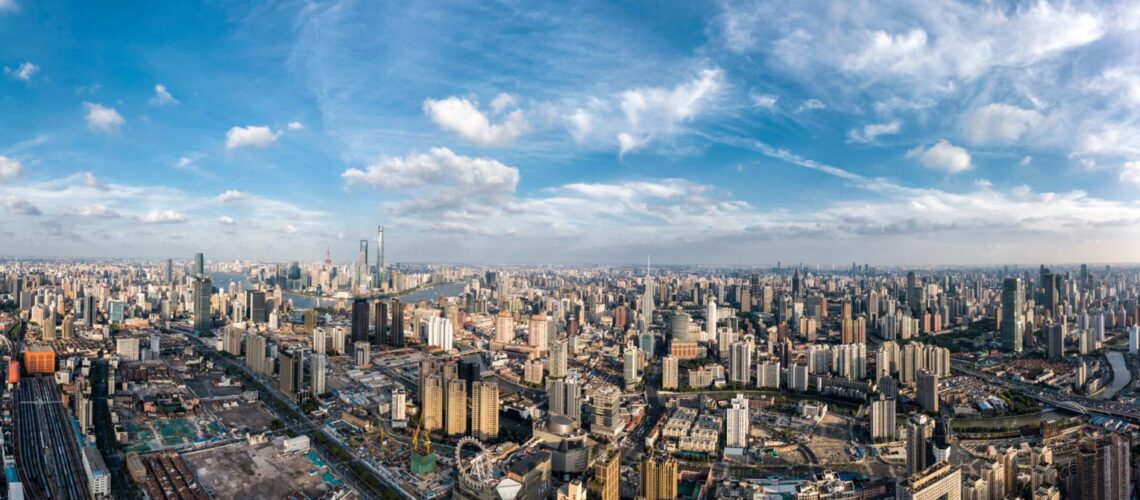
The real estate market is one of the largest industries in the world and plays a huge role in people’s lives, their work, their investments and how they create long term wealth. Property ranges from residential homes to high-end apartments, from office buildings to shopping malls, from industrial complexes to farmland and beyond.
However, what will be the value of the real estate market worldwide in 2026? It is a query that captivates property investors, homeowners, business people, and anybody participating in the global housing market.
The answer is as much as it’s measured. The total value of real estate assets is quite different from the money that is made from property sales, rentals and real estate investment transactions made annually. Savills estimates that the value of global real estate stood at around USD 393.3 trillion at the start of 2025. It is still one of the most complete and comprehensive property market estimates available to help understand the global property market.
Meanwhile, Global real estate market will approximately reach $4.56 trillion by 2026 according to the estimate by Grand View Research. These are all diverse aspects of the real estate industry but it is evident that it has become a significant industry.
This guide looks at the global market value of property, the key sectors, top countries, investment in the market and the things that will influence the future of the property market in 2026.
1. How much will the world’s real estate market be worth in 2026?
When considering the size of the property industry globally, it is not just the number of homes that is significant, but the industry’s scale. Real estate encompasses millions of homes currently out there that still have value whether they’re being bought or sold.
According to Savills, the world had $393.3 trillion worth of real estate at the start of 2025. It had studied residential property, commercial buildings and agricultural land.
This is not a confirmed valuation for year-end 2026 but does give a good idea of the size of the market.
Meanwhile, the global real estate market is projected to reach $4.56 trillion a year by 2026 by Grand View Research. Its market-size calculation is based on market activity of revenue not value of existing properties.
This is crucial because a $500,000 home is a part of the real estate asset base and it does not produce $500,000 in annual market revenues just by existing.
The value of the world’s property industry is affected by several factors:
- Property values and fluctuations in residents’ demand for housing.
- New residential and commercial development.
- Population increase and urbanisation.
-Rental income and leasing activity. - Foreign and domestic property investment.
- Infrastructure development and economy.
All of these elements contribute to the evolution of the real estate market.
2. What are the segments of the global real estate market?
The property industry has a number of different aspects to it worldwide. They both have their own uses, and appeal to different types of buyers and investors with different financial objectives.
Residential Real Estate
Residential real estate refers to homes, apartments, condominiums, townhouses and luxury villas. It represents the biggest asset value of the worldwide property market.
The value of residential property at the end of 2024 was about $286.9 trillion worldwide, per Savills.
Population growth, household income, the cost of housing loans, job prospects and availability of suitable homes all affect demand for housing.
For many families, purchasing a home is one of their biggest financial decisions. Residential properties can also generate rental income and have the possibility to appreciate over time for investors.
Commercial Real Estate
Commercial property has many types of business property such as office buildings, retail centres, shopping malls, hotels, etc.
By the end of 2024, Savills estimated that the global commercial real estate value was at around $58.5 trillion.
This sector caters to businesses with work spaces, retail areas, accommodation and other essential facilities.
Demand may fluctuate with growth, as workers take on more flexible working arrangements, and as shopping patterns shift from stores to online.
Industrial and Logistics Real Estate
Industrial real estate encompasses warehouses, distribution centers, manufacturing buildings, and logistics centers.
With the rise of e-commerce, these properties are becoming even more crucial. Retailers and manufacturers require appropriate sites for product storage and for delivery of orders.
Another aspect of the property sector that is gaining importance is data centers. These facilities support cloud computing, digital services, and AI, offering the physical resources for these technologies.
Agricultural Land
Agricultural real estate is defined as land used to farm, raise cattle and sheep, or grow crops for agriculture.
At the end of 2024, Savills estimated the value of global agricultural land was around $47.9 trillion.
This sector is affected by food production, population growth, land availability and the demand for food in agriculture. Long-term investors can also be drawn to farmland for its ownership and agricultural income.
3. Top Countries for Real Estate Markets.
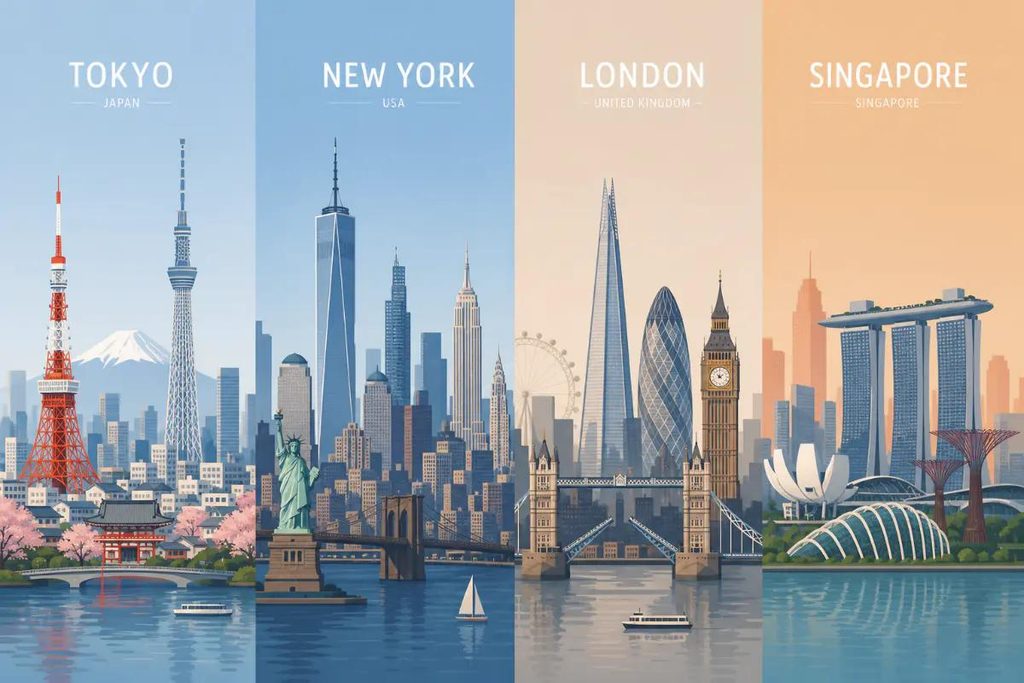
The size of the property market varies from country to country. National real estate values are determined by population, average property prices, economic strength, urban development and quantity of existing property.
Savills’ research singles out the U.S. and China as the two biggest real estate markets by property value.
China
Savills found that roughly 23.5% of the value of the world’s real estate was in China.
It is large, has a high housing stock, is dominated by major cities and is commercialized, making it an important part of the international property industry.
But, the real estate market in China has been facing problems, such as financial burden on developers, shifting housing demand, and declining residential prices in certain regions.
United States
The value of real estate in the United States accounted for about 20.7% of the global value of real estate.
It has residential houses, rental apartments, commercial offices, industrial buildings and luxury properties making up its property market.
The strength of the economy, jobs, and property markets make cities like New York, Los Angeles, Miami and Dallas a focus for buyers and investors.
Japan
The Japanese property industry is well established, with Tokyo a leading hub for property investment, both in terms of residential and commercial real estate.
It is driven by the population growth, urban demand for housing, business activity and buying preferences of homebuyers.
Germany
Germany is among the top real estate markets in Europe. Its property sector is made up of residential housing, industrial buildings, logistics facilities and commercial offices.
Its significant locations of properties include Berlin, Munich, Frankfurt and Hamburg.
United Kingdom
The UK has a diverse property market and London is an international hotspot for property investment, both residential and commercial.
Other cities, such as Manchester, Birmingham and Edinburgh also play a part in the national housing market and business property markets.
Other big markets are France, Canada, Australia, South Korea and Italy. In Savills’ analysis, the top ten national markets represent about 71% of the total real estate value in the world.
4. What will be the investment in real estate worldwide in 2026?
The size of the property industry is only partly reflected in the value of its stock. An additional useful measure is the investment dollars spent on the acquisition of existing properties.
Savills’ August 2026 research predicts investment in real estate will be in the region of $1.2 trillion by 2026, 14% up from 2025.
The study also found that approximately $500 billion was spent in the first half of 2026, which was almost 20% more than in the first half of 2025.
This indicates an upturn in investment activity, although the results of the individual markets and property areas are still varied.
Investors are eyeing a number of property types:
Residential rental properties with a potential for ongoing revenue.
Good quality offices in well-developed business areas.
- Warehouses/Logistics facilities for international trade.
- Technology company’s data centers.
- Retail properties & hospitality properties that are appropriate for the location.
- Residential property in high-quality and established locations.
The key for investors is not just the amount of money that flows into the market. They should also be familiar with property values, running costs, loan repayments, rentor demand and returns.
5. Which Factors are Making Property Market Around the World Soar?
The real estate sector evolves with the changing economies, technology and lifestyles of people. There are a number of key factors impacting on property demand in 2026.
The population increased and the urban population grew.Population grew, urban population grew.
As population expands and people settle in urban areas, housing needs, apartment needs, office needs, and public facilities needs can escalate.
The urban development also brings opportunities to the property developers, construction companies, landlords and investors.
But increased demand doesn’t necessarily mean each individual property will become more valuable. Availability and affordability of housing is also an issue.
Interest Rates and Mortgage Costs
Interest rates can impact a buyer’s ability to finance a property purchase.
High mortgage rates result in higher payments, which could dissuade some buyers. Lower cost financing to make home ownership available.
Another factor that investors will take into account is the interest rate they would be charged if they were to take out a loan to purchase the property.
Technology and Artificial Intelligence
Technology is altering the structure of properties, their marketing, buying and management.
AI can be used to assist in property research, customer service, building management, and market analysis.
Digital services are also growing in size, and technology infrastructure is emerging as a growing real estate segment.
Rental Housing Demand
Not all consumers are interested in buying a property. Some people choose to rent due to their lifestyle, work or financial flexibility, or educational reasons.
This opens the door for landlords and residential property companies in areas where there is a high demand for rentals.
Infrastructure Development
Some areas may be made more appealing by the development of new transportation systems, airports, roads and commercial centers.
Improved infrastructure can provide better access to work, education and business, and can affect local property demand.
6. What are the greatest problems in the global real estate market?
The property sector, no matter how big it is, is not immune from risk. Before investing or buying, it is important for investors and home owners to look at a number of obstacles.
Housing affordability: For many cities, housing costs and mortgage payments are unaffordable for middle-income families. This can restrict homeownership and drive up pressure in the rental market.
Economic uncertainty can affect the buying of real estate and investment confidence, such as through fluctuation in inflation, interest rates, and employment.
Rising material and labour costs and a shortage of land can make it harder to profitably complete new development projects.
Property Insurance, maintenance costs and long-term values may be impacted by climate related risks such as flooding, extreme temperatures, storms and more.
Demand for traditional office space has been affected by changing business needs – remote and hybrid working arrangements. Property owners/managers might require to enhance facilities and/or adapt buildings to ensure that tenants are attracted.
These challenges, however, must be understood as a large global market is not necessarily a good investment.
7. How will the global real estate market change over the next 5 years?
How people live, work, travel and use technology will shape the real estate landscape in the future. Residential property will still be important and commercial and industrial buildings will still be vital to support business activity.
The industry may be impacted by a number of developments in the next few years.
As consumers seek energy efficiency, security, and convenience with their homes, smart homes might be more prevalent. Sustainable construction could be a bigger focus as governments and developers address environmental issues.
At the same time, other facilities such as data centers, logistics centres and modern rental communities may be able to lure additional investors due to changing business needs and consumer habits.
Huge opportunities in established cities and emerging markets through international investment in property may yet remain. But buyers must do some research before buying real estate overseas regarding local laws, taxes, currency risks and ownership.
In the end, the real estate market around the world will not expand at the same speed. There can be strong demand at some places and over supply at others; prices may fall or be subject to economic pressures.
Conclusion
Then, what will be the value of the global real estate market by 2026? According to the most useful comprehensive valuation available from Savills, the value of all real estate assets in the world is about $393.3 trillion at the start of 2025. According to separately released figures from Grand View Research, the global real estate sector size is estimated to be around $4.56 trillion annually by 2026.
These are the figures for the residential, commercial, industrial and agricultural land sectors of an industry that is enormous in scope.
The property sector will remain attractive to investors, grow and develop as a result of urbanization, demand for renting, infrastructure development, and technological change. However, the market conditions are quite different from one country to another and from one city to another.
As a homeowner, investor and real estate expert, it is helpful to know these differences than just one global number. Investigating property, thinking realistically about financial arrangements and understanding local market conditions will still be vital in making informed property decisions.
(FAQs)
1. What will be the value of the global real estate market in 2026?
Savills’ most recent global real estate asset valuation was that global real estate assets reached around $393.3 trillion at the start of 2025. However, separately, Grand View Research estimates that the global real estate market size will reach $4.56 trillion by 2026.
2. Does the world’s real estate market have a value greater than $300 trillion?
Yes. Savills estimated the value of global real estate (residential and commercial) and agricultural land at $393.3 trillion at the beginning of 2025.
3. What is the biggest real-estate market in the world?
Savills’ analysis shows that China’s total real estate value is the biggest among all countries and regions, representing around 23.5% of the global real estate market. The U.S. is second.
4. Which segment of the global real estate market is the biggest?
Residential property is the biggest asset value type, accounting for 56.8% of the total asset value. It contains houses, apartments, condominiums and other properties for residential purposes.
5. What will be the total value of global real estate investment be in 2026?
In August 2026, Savills predicted global real estate investment will hit around $1.2 trillion in 2026.
6. What are factors that influence value of the global real estate market?
Real estate values are affected by the prices of properties, availability of housing, interest rates, population growth, demand for rentals, construction costs, economic conditions, and the development of infrastructure.
7. Will global real estate be a good investment in 2026?
Investment in real estate should yield rental income and possible long-term appreciation, but the outcome of the investment is dependent on the location, the price of the investment, financing, taxes, maintenance, and the market. Investors must consider the risks before making any investments.
8. So which real estate investments are catching investors’ eye in 2026?
Investors are turning to residential rental properties, prime offices, industrial and logistics buildings, data centers and certain retail properties. Opportunities are country specific and based on local market conditions.