
12 Affordable Home Improvement Ideas for Your Property
October 3, 2026
Improving your home does not always require a large renovation budget. Many practical upgrades can make a property more comfortable, attractive, functional, and easier to maintain without requiring major structural changes.
Whether you are preparing to sell, improving your current home, or simply want to refresh your living space, choosing the right projects can make a noticeable difference.
In this guide, we explore affordable home improvement ideas that homeowners can consider based on their budget, property condition, and personal priorities.
Why Affordable Home Improvements Matter
Home improvements can serve several purposes. Some upgrades improve everyday comfort, while others can make a property more appealing to future buyers.
The most useful improvements often address visible problems, improve functionality, or maintain important parts of the property.
Before starting a project, consider:
- Your available budget
- The condition of your home
- Your long-term plans
- Maintenance requirements
- Local property expectations
- Whether professional help is required
A low-cost improvement can be worthwhile when it solves a real problem or improves the home’s usability.
1. Refresh the Walls With a New Paint Color
Painting is one of the simplest ways to change the appearance of a room.
A fresh coat of paint can make rooms look cleaner and more updated. Neutral colors can also create a simple backdrop for different furniture and decorating styles.
You can keep costs under control by:
- Painting one room at a time
- Choosing durable paint
- Preparing surfaces properly
- Doing smaller rooms yourself when appropriate
- Repainting damaged or heavily marked areas
If the walls are damaged, address the underlying problem before painting.
2. Improve Your Front Door and Entryway
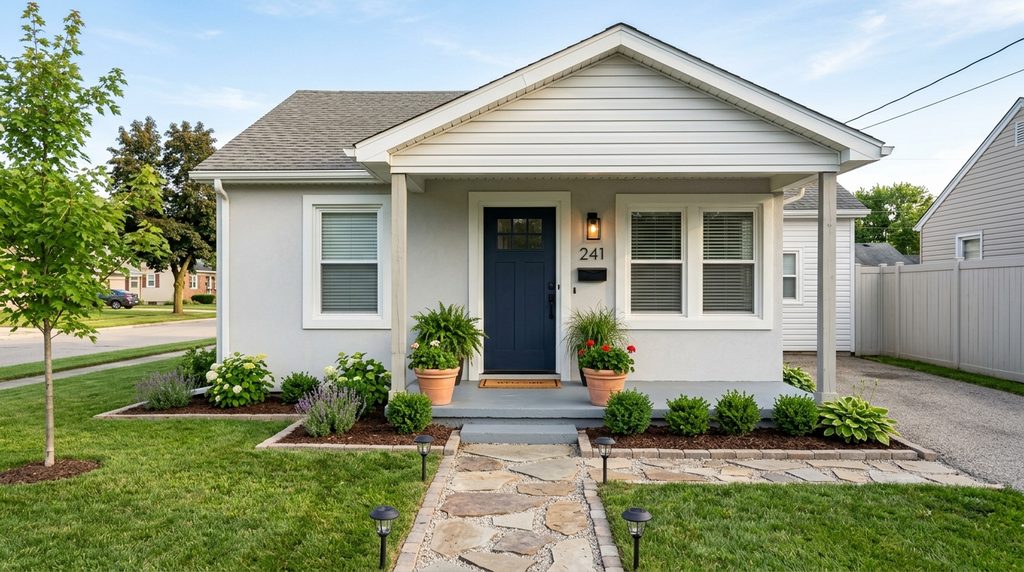
The entrance is one of the first parts of a home that visitors notice.
A simple entryway update can include:
- Cleaning the front door
- Repainting the door
- Replacing worn hardware
- Updating exterior lighting
- Adding a simple house number
- Keeping the entrance free of clutter
A well-maintained entrance can make the property feel more welcoming without requiring an expensive renovation.
3. Upgrade Lighting Fixtures
Lighting can change how a room looks and feels.
Consider replacing outdated fixtures with modern, appropriately sized options. You can also improve the lighting arrangement by adding:
- Task lighting
- Under-cabinet lighting
- Reading lamps
- Entryway lights
- Bathroom lighting
When selecting electrical fixtures, make sure installation is safe and compliant with local requirements. Hire a qualified professional when electrical work requires expertise.
4. Improve Kitchen Hardware
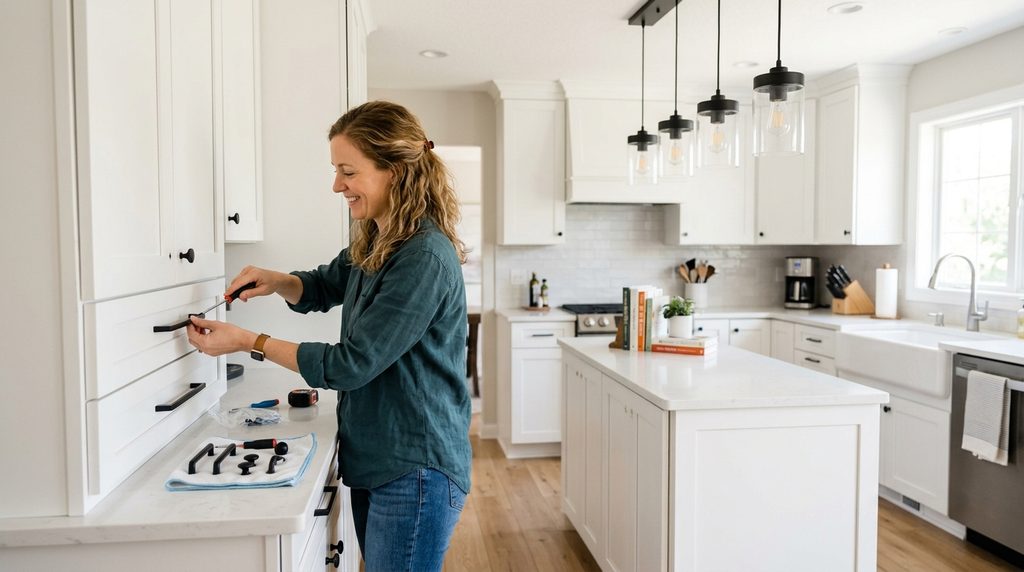
A complete kitchen renovation can be expensive, but smaller updates may provide a noticeable visual improvement.
Consider replacing:
- Cabinet handles
- Drawer pulls
- Faucets
- Worn shelves
- Damaged cabinet hardware
Choose hardware that works with the existing cabinets and overall kitchen style.
If the cabinets themselves are structurally sound, updating their appearance may be more practical than replacing the entire kitchen.
5. Refresh the Bathroom
Bathrooms can often benefit from relatively simple improvements.
Affordable projects may include:
- Replacing worn shower curtains
- Updating cabinet hardware
- Replacing damaged accessories
- Improving lighting
- Replacing old caulk
- Deep cleaning grout
- Adding practical storage
Pay particular attention to moisture problems. Cosmetic improvements should not hide leaks, water damage, mold, or ventilation issues.
6. Improve Home Storage
Better storage can make a home feel more organized and functional.
You can add practical storage through:
- Shelving
- Closet organizers
- Entryway hooks
- Under-bed storage
- Bathroom cabinets
- Kitchen organizers
Before buying storage products, measure the available space carefully.
The best storage solutions are those that make everyday items easier to access while reducing visible clutter.
7. Make Energy-Efficient Improvements
Some home improvements can help reduce energy consumption while improving comfort.
Depending on your property, consider:
- Sealing obvious air leaks
- Improving insulation where appropriate
- Using energy-efficient lighting
- Maintaining heating and cooling equipment
- Improving window coverings
- Checking doors and windows for drafts
The potential savings from energy improvements vary according to climate, building condition, energy prices, and household usage.
For larger projects, consider getting professional advice about which improvements are appropriate for your home.
8. Improve Curb Appeal
Exterior appearance can influence how people perceive a property.
You do not necessarily need a major landscaping project.
Affordable curb appeal improvements may include:
- Trimming overgrown plants
- Cleaning pathways
- Removing outdoor clutter
- Refreshing planters
- Maintaining the lawn where applicable
- Cleaning exterior surfaces
- Improving outdoor lighting
Focus on keeping the exterior clean, maintained, and consistent with the property.
9. Repair Small Problems Before They Become Bigger
Preventive maintenance is one of the most practical forms of home improvement.
Small issues can sometimes become more expensive when ignored.
Check for:
- Leaking faucets
- Damaged seals
- Loose handles
- Cracked tiles
- Peeling paint
- Blocked gutters
- Damaged weatherstripping
- Minor plumbing problems
Some repairs are suitable for homeowners with the right skills, while others should be handled by qualified professionals.
Do not attempt electrical, structural, gas, or other hazardous work unless you have the appropriate expertise and authorization.
10. Update Flooring Where Needed
Replacing every floor in a home may not be necessary.
Instead, focus on areas where flooring is visibly worn or damaged.
Depending on the room and existing surface, options may include:
- Repairing damaged sections
- Deep cleaning carpets
- Refinishing suitable wood flooring
- Replacing worn flooring in a small room
- Using appropriate rugs to improve appearance and comfort
Choose flooring based on durability, maintenance requirements, moisture exposure, and expected use.
11. Create a More Functional Outdoor Area
If your property has a balcony, patio, garden, or other outdoor space, a few improvements can make it more useful.
Consider:
- Cleaning the area
- Adding simple outdoor seating
- Improving lighting
- Organizing plants
- Creating a small dining area
- Adding weather-appropriate storage
The goal does not have to be an expensive outdoor renovation. A clean, functional space can be valuable for everyday use.
12. Declutter and Reorganize Your Home
One of the most affordable improvements may cost almost nothing.
Removing unnecessary items can make rooms feel larger and easier to use.
Start by sorting belongings into categories such as:
- Keep
- Donate
- Sell
- Recycle
- Dispose
Then reorganize the items you keep.
Decluttering can also help homeowners identify areas that genuinely need improvement rather than spending money on unnecessary decorative changes.
How to Choose the Right Home Improvement Project
Not every improvement is equally suitable for every property.
Before starting a project, ask yourself:
Does it solve a real problem?
Prioritize improvements that address maintenance, safety, comfort, or functionality.
Will it improve everyday use?
An attractive upgrade can be useful, but practical improvements may provide more lasting value to your household.
Does it fit the neighborhood?
Consider whether the improvement is appropriate for the type and location of your property.
Is the project within your budget?
Set a maximum budget before purchasing materials.
Do you need professional help?
If a project involves structural work, major plumbing, electrical systems, gas, roofing, or other specialized areas, consult an appropriately qualified professional.
Affordable Home Improvement Budget Tips
A simple budget can help prevent small projects from becoming expensive.
Consider dividing your budget into:
| Expense | Example |
|---|---|
| Materials | Paint, fixtures, hardware |
| Labor | Professional installation |
| Tools | Equipment needed for the project |
| Repairs | Unexpected issues |
| Finishing | Cleaning and final touches |
| Contingency | Extra amount for unexpected costs |
Get multiple quotes for significant professional work when practical, and confirm exactly what each quote includes.
Should You DIY or Hire a Professional?
DIY projects can reduce labor costs, but they are not appropriate for every task.
Projects that may be suitable for capable DIY homeowners
Examples can include:
- Painting
- Basic decorating
- Decluttering
- Simple shelving
- Some hardware replacements
- Basic landscaping
Projects that may require professional assistance
These can include:
- Major electrical work
- Gas work
- Structural modifications
- Major plumbing
- Roofing
- Significant water damage
- Complex heating or cooling work
Local building codes and professional requirements vary, so check the rules that apply to your property.
Home Improvements to Prioritize Before Selling
If you are planning to sell your property, focus on improvements that address visible defects and maintenance issues.
Potential priorities include:
- Deep cleaning
- Decluttering
- Minor repairs
- Fresh paint where needed
- Exterior maintenance
- Improving lighting
- Fixing obvious damage
- Improving the entryway
Avoid assuming that every expensive renovation will automatically produce an equivalent increase in selling price.
Before making a major investment, consider local buyer expectations and discuss the project with a qualified local property professional.
Common Home Improvement Mistakes
Spending Without a Plan
Starting multiple projects at once can make it difficult to control costs.
Choosing Appearance Over Maintenance
A beautiful improvement does not solve underlying problems such as leaks, moisture, or structural damage.
Ignoring the Property’s Existing Style
Major changes that conflict with the home’s design may not produce the desired result.
Underestimating Labor Costs
Materials may appear affordable until installation and professional labor are included.
Doing Unsafe Work Yourself
Saving money is not worth creating a safety hazard. Specialized work should be handled by appropriately qualified professionals.
Final Thoughts
The best affordable home improvement ideas are not necessarily the most expensive or dramatic. Simple improvements such as painting, better lighting, improved storage, minor repairs, exterior maintenance, and decluttering can make a home more comfortable and attractive.
Start by identifying the areas that genuinely need attention, create a realistic budget, and prioritize projects that improve functionality, maintenance, safety, or appearance.
If you are improving your property before selling, research your local market and focus on improvements that make sense for your particular home rather than assuming that every renovation will increase its value.
Frequently Asked Questions
What are the most affordable home improvement ideas?
Painting, decluttering, improving lighting, updating hardware, adding storage, maintaining the exterior, and completing minor repairs can be relatively affordable ways to improve a home.
Which home improvements can make a house more attractive?
A fresh, clean appearance can often be achieved through painting, better lighting, improved curb appeal, updated fixtures, organized storage, and addressing visible maintenance problems.
Should I renovate my kitchen on a small budget?
You may not need a complete renovation. Updating cabinet hardware, lighting, faucets, storage, or selected finishes can refresh the kitchen while keeping the project smaller.
Is painting a good home improvement project?
Painting can be a practical improvement because it can refresh the appearance of rooms relatively quickly. Proper surface preparation and choosing an appropriate paint are important for a durable result.
What home improvements should I make before selling?
Consider prioritizing cleaning, decluttering, minor repairs, exterior maintenance, and visible cosmetic improvements. Larger renovations should be evaluated based on the local market and the property’s condition.
Can energy-efficient improvements save money?
Some energy-efficiency improvements can reduce energy consumption, but the potential savings depend on factors such as the home’s condition, climate, energy prices, equipment, and household usage.
Should I do home improvements myself?
Some simple projects may be suitable for capable homeowners, but specialized work involving electrical systems, gas, structural components, major plumbing, or other hazards may require qualified professionals.
How do I create a home improvement budget?
List the project materials, tools, labor, permits or professional fees where applicable, and potential unexpected costs. Set a spending limit before starting the work.